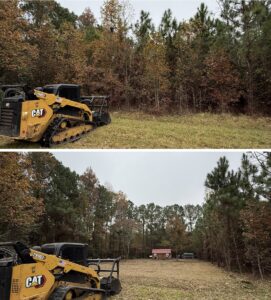
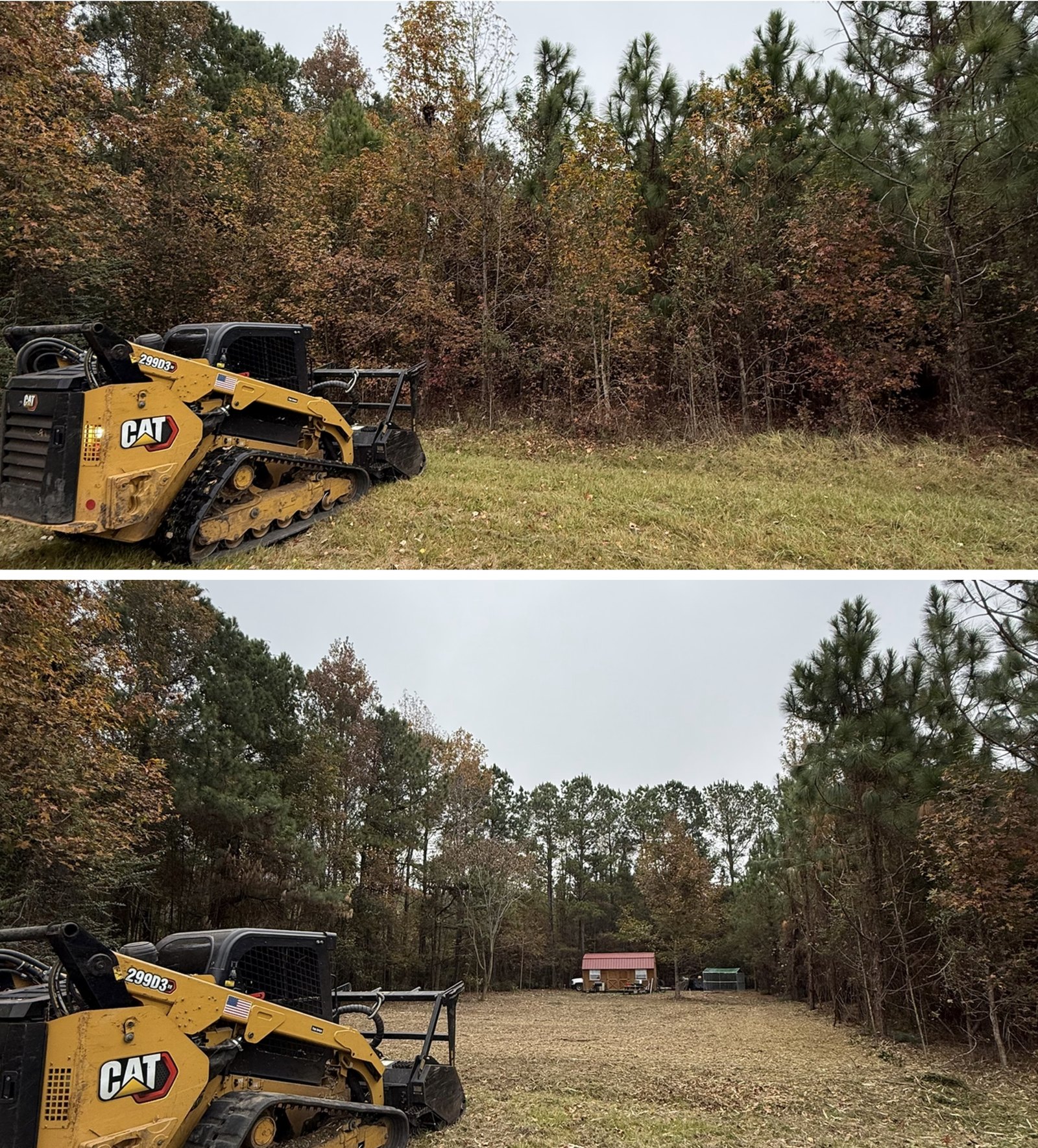
Land clearing removes trees, brush, stumps, and other overgrowth from a defined area so you can use the ground for a home, fence, garden, outbuilding, or open yard. The right plan depends on what is on the property, what should stay, and what the land must support after the crew leaves. If you want work completed before the wetter winter season, start with a site visit early enough to plan utilities, access, drainage, and the finished grade.
What Land Clearing Includes
Land clearing is not just cutting trees down. A complete scope may include vegetation removal, stump and root work, debris handling, rough grading, and a final walkthrough. Live Oak Property Services explains its residential land clearing service around that full result: clear, workable ground that is ready for the next use.
Start with the finished use
A future homesite needs a different finish than an open backyard. A fence line may need a narrow, clean path. A garden may need good access and a surface that will not hold piles of roots. Before equipment arrives, decide whether the goal is construction prep, a usable yard, better access, or simple property reclamation.
That answer helps set the clearing boundary and prevents paying for work outside the area you need. Mark trees, structures, septic features, wells, fence lines, drainage paths, and any vegetation that should stay.
Clear the full scope
Above-ground growth is only one part of the job. Larger stumps and root masses can interfere with fencing, grading, mowing, and future building work. Ask whether the estimate includes stump extraction, rough grading, debris handling, and cleanup, or whether those items are separate.
Did You Know? A property can look open after brush is cut while still holding stumps and root balls below the surface. The finish you need after clearing should guide the equipment and the estimate.
Match the Clearing Method to the Property
Land clearing is a broad term. The best method depends on vegetation, access, soil conditions, and the result you want. A good contractor should explain the tradeoffs instead of forcing every property into the same process.
Forestry mulching for overgrowth
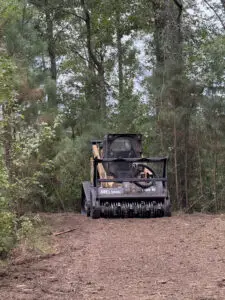
Forestry mulching grinds trees, brush, vines, and other vegetation in place. It is often a strong fit when the main goal is to reclaim overgrown ground without hauling every piece of material away. The mulch stays on the property and can help cover exposed soil, but it does not create the same bare, graded surface as a full site-clearing project.
Full land clearing for a ready site
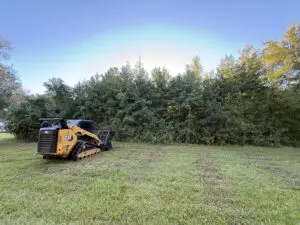
When a property needs stumps removed, roots addressed, and the ground prepared for another phase, a skid steer with a mulcher attachment may work alongside a mini excavator. The excavator can handle larger stumps, root masses, and rough grading that a mulcher is not designed to complete.
For a vacant parcel that must become a clean, workable surface, lot clearing may be the more precise description. The important question is not which service name sounds best. It is what the land needs to look and function like when the work is finished.
Preserve trees when full clearing is not the goal
If you want to open a wooded property while keeping mature trees, underbrush clearing may fit better than removing everything. It focuses on shrubs, vines, briars, and small volunteer trees beneath the canopy. Mark the trees and plant groups you want preserved during the first walkthrough.
Pro Tip: Walk the property with the contractor before the estimate is finalized. Point out the exact keep areas, no-go zones, access route, and finished-use areas. A shared boundary plan reduces surprises once equipment starts moving.
What Drives the Cost of Land Clearing?
Acreage matters, but it does not tell the whole story. Two half-acre properties can require very different amounts of time and equipment. Live Oak prices projects after looking at the property and discussing the scope, rather than using one flat price per acre for every job.
The biggest cost factors are usually:
- Vegetation density and tree size: Thick brush, mature trees, vines, and invasive growth take more passes or different equipment than light overgrowth.
- Stumps and roots: Extraction adds work beyond cutting or mulching the visible vegetation.
- Access and terrain: Narrow gates, slopes, wet areas, long travel routes, and nearby structures can change how equipment reaches the work zone.
- Debris and finish level: Leaving mulch in place is a different scope from hauling material away, removing stumps, and preparing a surface for construction.
Did You Know? The cheapest headline estimate may not be the lowest project cost if it leaves stumps, debris, or rough ground for the next contractor. Compare the finished result and the items included, not only the first number.
How to Plan Land Clearing Before Winter
South Carolina Lowcountry projects can continue through winter, but rain and soft ground can affect access and scheduling. Planning early gives you time to confirm the scope, protect the site, and adjust the start date if conditions are not safe for heavy equipment.
Mark utilities and site features
If the work includes excavation, stump removal, grading, or other ground disturbance, discuss a utility locate before equipment arrives. SC811 says South Carolina law requires notice and marked utility lines before planned excavation. Private lines, septic systems, wells, irrigation, and buried pet fencing may need separate attention because they are not always covered by public utility marks.
Check drainage and ground conditions
Walk the site after rain if possible. Note low spots, standing water, soft entrances, ditches, culverts, and routes that could carry runoff toward a road or neighboring property. USDA Natural Resources Conservation Service guidance recommends minimizing soil disturbance and avoiding equipment use when soil is wet to limit compaction.
Land disturbance can also involve stormwater requirements. South Carolina Department of Environmental Services identifies clearing, grading, filling, excavation, and other land-disturbing construction activity among regulated activities at one acre or more, with additional rules for some coastal locations. Project requirements depend on the property and the work, so confirm details with the appropriate state or local office before starting.
Leave time for the next phase
If a fence, driveway, building pad, garden, or landscaping project follows the clearing, plan those dates together. The ground may need time for cleanup, grading, inspection, or a change in weather. A realistic schedule is better than booking the next crew for the first possible day and hoping the site is ready.
Pro Tip: Choose a backup access route before winter weather arrives. A route that works when the ground is dry may create deep ruts after rain, especially near gates, low areas, and property edges.
What to Expect From a Professional Estimate
A useful estimate begins with a conversation about the property and its next purpose. Live Oak Property Services is based in Moncks Corner and serves residential landowners throughout the Lowcountry. Its process uses a site walkthrough to review vegetation, boundaries, utilities, access, wet areas, trees to preserve, and the equipment the project may need.
Bring a parcel map or survey if you have one. Mark the area to clear, list the features that must remain, and describe the finished result in plain terms. Ask what is included for stump removal, grading, debris, cleanup, weather delays, and changes to the scope. A clear written quote makes it easier to compare contractors and keep the project moving.
Plan the next step
The best land-clearing plan starts before the machine arrives. Define the finished use, choose a method that fits the property, identify utilities and drainage, and leave room for wet-weather changes. That approach helps protect the ground and keeps the next phase from starting with unfinished work.
To discuss a Lowcountry property, request a free estimate through Live Oak Property Services. The team can walk the site, explain which equipment fits the work, and give you a clear project scope before you schedule the job.
Frequently Asked Questions
What is included in land clearing?
Land clearing can include removing trees, brush, stumps, roots, and other overgrowth from a defined area. Depending on the property and finished use, the scope may also include rough grading, debris handling, and cleanup.
How much does land clearing cost?
Land clearing is priced by the project because vegetation, access, terrain, stump work, and the desired finish vary from property to property. A site visit gives the contractor the details needed for a useful estimate.
Do I need to call 811 before land clearing?
If the work includes excavation, stump removal, grading, or other digging, discuss a utility locate before equipment starts. SC811 requires notice for planned excavation, while private utilities and septic features may need separate marking.
Can land clearing be completed before winter?
Often, yes, but the schedule depends on site conditions, equipment access, and the scope of work. Start early enough to allow for the estimate, utility marking, wet-weather delays, cleanup, and the next phase of your project.