If your property has thick brush, scrub trees, or vines taking over, forestry mulching clears it in a single pass and leaves the ground ready to use. Instead of cutting and hauling truckloads of debris, a mulcher grinds everything down on-site, so there’s no burn pile and no dump trailer rolling down your driveway. For Lowcountry landowners around Moncks Corner, that one difference changes the whole project.
We’ve watched this play out on dozens of properties. A homeowner calls about a backyard that’s grown up with privet and vines, expecting a multi-day cleanup with a trailer full of debris by the end. Then they watch a skid steer with a mulcher attachment finish in the same area in an afternoon, with nothing to load and nothing to burn. That reaction is the reason this service has grown so fast in our area.
What Forestry Mulching Actually Is
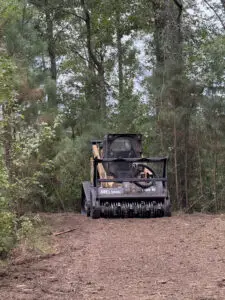
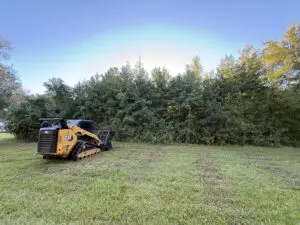
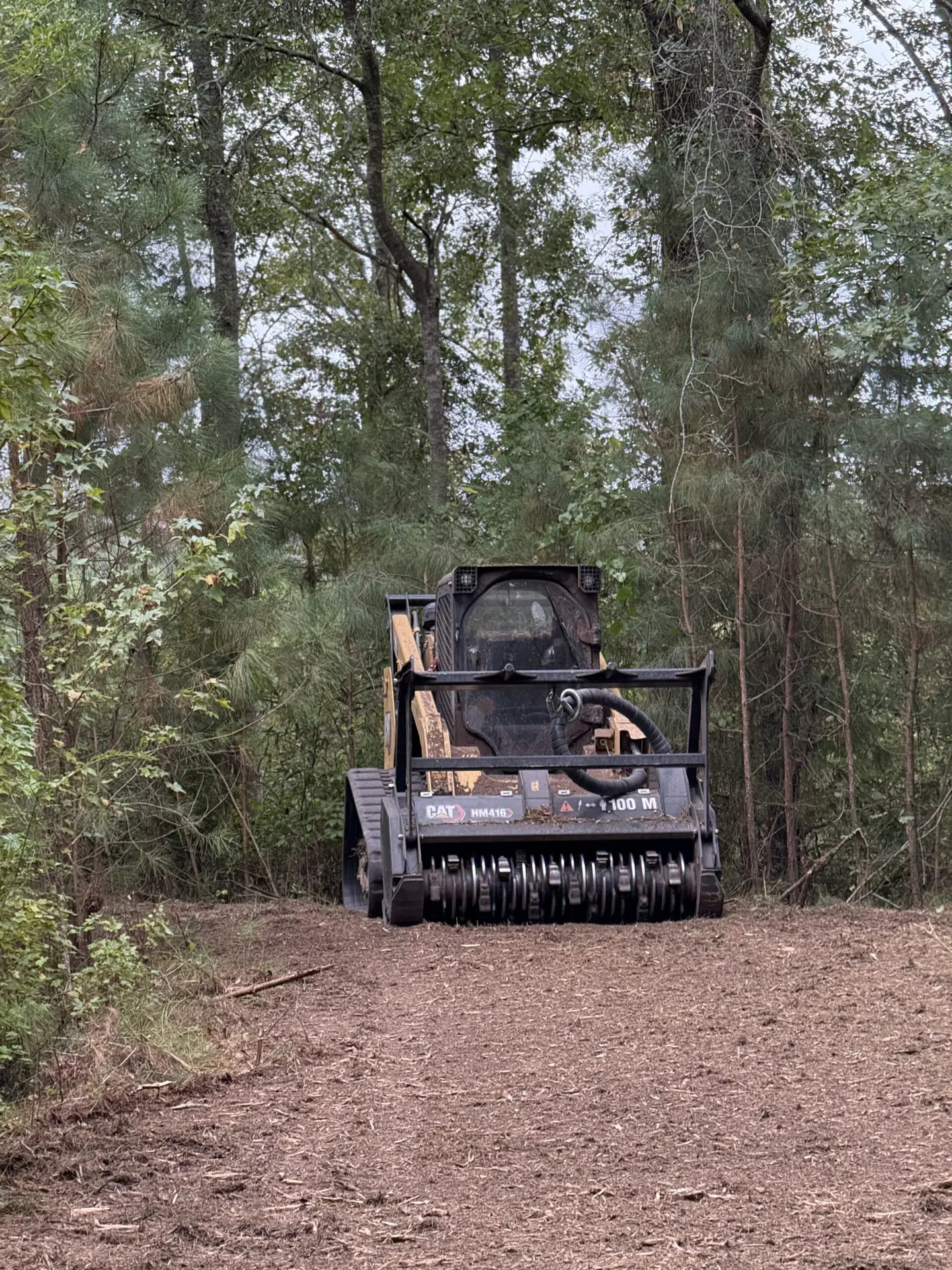
Forestry mulching uses a single machine, usually a skid steer or tracked carrier fitted with a rotating mulcher head, to grind trees, brush, and vines into wood chips right where they stand. There’s no chainsaw crew, no separate hauling truck, and no burn pile waiting for a dry day. The machine clears and processes the vegetation in one pass.
This matters most on properties under an acre, which describes most of the residential lots we work on around Moncks Corner, Bonneau, and St. Stephen. A half-acre lot with heavy scrub can usually be cleared in a single day with this method, where traditional clearing might stretch into a multi-day job with separate equipment for cutting and removal.
Did You Know? A forestry mulcher can process material up to several inches in diameter without slowing down, which is part of why it handles overgrown lots faster than hand-clearing crews.
How the Equipment Actually Works
The machine drives directly over brush and small trees, and the cutting head shreds the material into mulch as it moves forward. Operators work in passes, moving methodically across the property rather than working tree-by-tree like a chainsaw crew would.
Why It’s Different from Traditional Clearing
Traditional land clearing often separates the job into stages: cutting, piling, and hauling or burning. Forestry mulching collapses those stages into one. That’s a major reason it tends to cost less and finish faster on smaller residential properties.
Why Leaving the Mulch Behind Actually Helps Your Soil
One of the biggest misconceptions we run into is that the leftover wood chips are a mess to clean up later. In practice, that layer of mulch is doing your soil a favor. The USDA’s Natural Resources Conservation Service explains that healthy soil practices that restore organic matter and prevent erosion are central to long-term land productivity. A fresh mulch layer does exactly that. It shields bare soil from heavy rain, slows runoff, and breaks down over time to add organic matter back into the ground.
Pro Tip: If you’re planning to reseed or landscape after mulching, ask about leaving a thinner mulch layer in those specific areas. A few inches of mulch protects soil, but too much can slow new grass from establishing.
We’ve had property owners ask us to rake the mulch into a tidier layer after the job, and that’s a request we’re happy to accommodate. But left alone, the mulch isn’t waste. It’s free ground cover doing real work.
What Forestry Mulching Is Good For
This service fits a specific set of situations better than others, and knowing which one you’re in helps set the right expectations.
- Overgrown residential lots. Scrub trees, privet, and vines that have taken over a yard or back acreage are the most common job we see, and forestry mulching clears them without leaving a debris pile behind.
- Pre-construction prep. Properties getting ready for a fence, shed, or addition need a clean, walkable surface, and mulching delivers that without a separate haul-off step.
- Reclaiming neglected acreage. Land that hasn’t been touched in years often has a mix of brush, small trees, and vines that would take a hand crew weeks to clear by hand.
Properties over an acre or with heavy stands of larger timber usually call for a different approach, like full land clearing with an excavator. That’s a conversation worth having before any work starts, since the wrong method on the wrong property can cost you time and money.
What a Forestry Mulching Job Actually Costs
Pricing depends mostly on vegetation density, lot size, and how much of the property needs work. A lightly overgrown half-acre with scattered scrub will cost less than a fully wooded half-acre with dense undergrowth, even though the acreage is identical. Terrain and access also factor in. A flat, open lot is faster to clear than one with slopes or limited equipment access.
| Factor | Why It Affects Price |
| Vegetation density | Thicker brush and more trees mean slower passes and more wear on the mulcher head |
| Lot size | More square footage means more time on-site |
| Terrain | Slopes and wet ground slow equipment down |
| Access | Tight gates or long driveways can add setup time |
The only way to get an accurate number is a site visit. We give every customer a free estimate based on what’s actually on the property, not a guess over the phone.
How Forestry Mulching Compares to Other Clearing Methods
Property owners often aren’t sure which service fits their land, and that’s a fair question since the names sound similar. Land clearing typically involves removing vegetation and hauling it away, which makes sense for larger properties or sites needing a completely bare lot. Underbrush clearing focuses on thinning out shrubs and vines while keeping mature trees standing, which is the right call if you want to preserve your tree canopy. Forestry mulching sits in between: it clears fast and leaves mulch behind, making it the better fit when speed and soil benefit matter more than a fully bare lot.
Is forestry mulching better than traditional land clearing?
Forestry mulching is usually faster and leaves the soil better protected, since it processes vegetation in place instead of hauling it away. Traditional land clearing is often the better call on larger acreage or when a completely bare lot is the goal.
If you’re planning a larger project that also needs grading or lot clearing work afterward, mulching is often the first step that makes everything that follows easier and cheaper.
Working with a Local Lowcountry Crew
We’re a small, owner-operated outfit based in Moncks Corner, and that shapes how we run every job. We use a skid steer with a mulcher attachment and a mini excavator, choosing the right tool for what the property actually needs instead of running every job the same way. We’ve never had a complaint about the quality of our work, and we plan to keep it that way.
Did You Know? Most of our forestry mulching jobs in the Lowcountry are completed in a single day, since we focus on residential properties under an acre rather than large commercial tracts.
Clemson Cooperative Extension’s Forestry & Wildlife Resources program is a useful resource if you want a deeper, research-based look at land management decisions specific to South Carolina, including how vegetation management affects long-term forest health on residential acreage.
Frequently Asked Questions
How much does forestry mulching cost per acre? Pricing varies based on vegetation density, terrain, and access, but most residential jobs are quoted by the project rather than a flat per-acre rate. A free, on-site estimate gives you the most accurate number for your specific property.
Will forestry mulching kill the trees I want to keep? No, when done correctly. The mulcher works above ground and avoids root systems, and operators can work carefully around any trees you flag before the job starts.
How long does a typical job take? Most residential lots under an acre are completed in a single day. Larger or denser properties may take longer, which your estimate will reflect.
Is forestry mulching messier than regular land clearing? It’s actually less messy. The processed material stays on-site as mulch instead of leaving piles of debris that need to be hauled away or burned.
Can forestry mulching be done year-round? Yes, in most of the Lowcountry. Work can slow slightly in the wettest winter months, but jobs typically run on a normal schedule throughout the year.
Overgrown land doesn’t have to mean weeks of cutting, hauling, and burning. Forestry mulching clears the brush, protects your soil, and gets your property usable again in a fraction of the time traditional methods take.
If you’ve got a Lowcountry lot that needs reclaiming, reach out for a free estimate and we’ll walk the property with you before any work begins.